

Oh, the Books I Read in 2025
What a year. I read so many great books: fiction and memoirs and non-fiction and experimental work. I've got great recommendations (and a few dire warnings) to share with you (and the many strangers I sidle up to in bookstores all year round.)
FICTION

Small Rain by Garth Greenwell
I always wondered if one (maybe I) could write a novel as if it were a memoir. What would the
difference between that and a “regular” novel be? Small Rain is the answer to the first question. And the answer to the second, I think, is apperture. This is a first-person account of a twelve day hospital stay at the height of Covid. The narrator—a poet and professor in his forties—is admitted through the ER, following the sudden onset of excruciating pain. The detail and specificity of each hospital interaction as the doctors and specialists try to identify a cause (for what we soon learn is an aortic tear) aren’t there to give the story verisimilitude—they are the story. It’s an artistic feat, unlike anything I’ve read before; and I checked multiple times during my reading to make sure it wasn’t a memoir. The way the narrator remembers moments from his recent past—a tense relationship with a contractor doing work on his home, for example—seem, at first, like simple digressions, until you realize they’re mirrors of what happens everywhere, in the hospital, in life, in hospital life—it’s all poetry—sometimes perfect, sometimes impenetrable, and everything in between. Side note: I wonder how this reviewer would have felt if he’d experienced this novel as a memoir. I know this won’t be for everybody, and some will find it monotonous, but I thought it was beautiful.

The Empusium by Olga Tokarczuk
Under normal circumstances, I don’t finish books I’m not enjoying, but this was our January bookclub book, so the standard rules do not apply. This book (written by a Nobel prize winner who is clearly 100% out of fucks) somehow manages to be unnervingly weird and excruciatingly boring all at the same time. I guess this should come as no surprise since it’s a riff on The Magic Mountain (which our bookclub agreed to abandon before someone died of tedium and nothingness). The subtitle—“a health resort horror story”—feels like some publishing house trickery--an attempt to make The Empusium sound like an HBO limited series when what it really is is a bunch of doddering white men with TB going for walks, getting drunk, and talking about how much they hate women. PAINFUL. The second half was definitely more compelling than the first, and I appreciated the sharp commentary about the danger of binaries (of all kinds) as well as the (very satisfying) surprise ending (which I guess this author is known for), but The Empusium could have (and SHOULD HAVE) been a short story. It would have saved us all a whole lot of time. That said, the reading led to a surprisingly lively book club discussion, in which I was the grumpiest detractor. Before that discussion I thought anyone who professed their love for this book was either lying or mentally unwell. Now I think it’s a novel with an important message that was poorly edited (if edited at all).

When the World Tips Over by Jandy Nelson
Wow wow wow. Sometimes I wonder if YA is wasted on young adults. And I’m curious why books about kids—or told from kid perspectives—aren’t marketed to adults. I would follow the Fall kids anywhere. This big sweeping epic of family lore and romance and magic and ghosts and friendship and food and music and love is just bursting with joy and color and personality. I loved it so much.

Funny Story by Emily Henry
Super cute, and, true to its title, very funny. Instead of the standard “enemies to lovers” premise, Funny Story is about two jilted lovers who end up living together when their respective exes decide to marry each other. I listened to the audiobook, read by the fabulous Julia Whelan.

Playworld by Adam Ross
I’m not sure if it’s the book or the world that’s to blame, but it took me an unusually long time to finish this—despite the fact that it was very, very good. A coming of age novel that, in its specificity, I was convinced had to have been based on the author’s real life, Playworld is Gatsbyan in its social commentary. It turns out it was inspired by Ross’s life as a child actor and high school wrestler coming of age in Manhattan, and it made me wonder if there were any adults in the 1980s. The ones featured here are trainwrecks: messy, self-serving and negligent—and yet they don’t read as anomalies. Poor Griffin, our earnest narrator, is just tied to the tracks. Interestingly it’s a peer—a young girl named Amanda (as so many of us born in this era were)—who makes him aware of his victimhood. Ross’s writing and quality of observation are, somehow, masterful and gravitational, operating simultaneously
as propellor and handbrake. I haven’t read anything quite like it before.

Sandwich by Catherine Newman
God this was great. Warm and funny and witty and wise. The narrator, a mom in mid life—son and daughter grown, parents aging—offers a first-person account of their annual beach vacation in Cape Cod. There is motherhood, and menopause (with all its symptomatic bluster), and a long kept secret. There are joyful and hilarious family dynamics, and a cat named chicken. There is poignancy and heart—but also laughs and laughs and laughs. I shook the bed laughing. This is an amazing, ordinary family with lessons to learn and plenty to teach us. Highly recommend.

You Think It, I’ll Say It by Curtis Sittenfeld
Well, I’ll be damned. Curtis Sittenfeld’s short stories are every bit as good as her novels, so I can no longer claim to be “lit down” when she announces a new collection. Now I’m looking forward to reading her latest (which I’ve heard includes one of the characters from Prep). My beef with short stories is twofold: they’re rarely short enough and they often have this thing that I can only describe as MFA Program Vibes—like they were all manufactured in the same sparse, prairie-esque inner monologue factory. Not these though. These are like little mini novels. Modern and snappy with characters you recognize and dialogue that echoes the way people actually think and talk. I loved every bit of it.

Audition by Katie Kitamura
An unreliable narrator who is also an aging actress, starring in the most complex role of her career. An ambitious—or is he?—young man, who may or may not be her son. A marriage to which husband and wife may or may not have been faithful. Audition is performance art on the page—playing with themes of identity, reality, aging, boundaries, and relationships and how they intersect. It’s a compact, shape shifting work of art that leaves you with more questions than answers—but still satisfyingly so.

The Secret History by Donna Tartt
When I first started my Bookstagram account, my feed was inundated with posts and reels celebrating The Secret History. It was an art object, appearing on every photographed shelf, book cart, and flat lay of all time favorites. I’d read it, but remembered it as little more than a campus novel about a miserable college cohort who murder their annoying friend. The fan worship made me crotchety and suspicious; is everyone just pretending to love this book because that’s what “bookstagrammers do”? Anyway, curiosity got the better of me and I gave it another go. I will admit it is much more than a miserable pack of pretentious college coeds studying Greek. There’s nuance and intrigue and humor. And Donna Tartt is a phenomenal writer. I also suspect there’s a whole layer of meaning I’m missing because I’m not a classicist. (But surely the bulk of bookstagrammers arent either)? Ultimately it’s a book about the ties that bind and how shared history shapes friendships and self perception (and vice versa) .It’s also about the ways we are haunted by our pasts. I enjoyed it, but I still can’t put my finger on the reason it’s captured the hearts of the masses and become part of the classic literary cannon. Like The Goldfinch, The Secret History could have used a tight edit. Maybe it's me--or maybe Donna Tartt doesn’t take kindly to cuts. I loved The Goldfinch, but it hasn’t lingered with me. Maybe this one will, and that’s what the deep seated devotion is all about.

Stone Yard Devotional by Charlotte Wood
Unique, compelling and beautiful. This has been on my list since it was shortlisted for the Booker last year. The unnamed narrator—despondent in midlife and disillusioned with her career, escapes to a convent in south Wales to live among the nuns. As she attempts to weave herself into the daily rhythms of their lives, the convent is beset with disruptions: a mouse plague, the returned bones of a nun murdered years before, and a visitor from the narrator’s past. As she rides these waves—the narrator reflects on relationships and moments from her past—meditating on themes of guilt, forgiveness, connection, independence and what it means to value living.

Listen for the Lie by Amy Tinterra
This was a fun whodunnit—told through first-person narrative and podcast interviews. The audiobook narration was especially good—with two rockstar voice artists—January Levon and Will Damron (who are married in real life)—voicing a big cast of small-town Texan characters. I dug it.

Tell Me Everything by Elizabeth Strout
Well damn. This was something special. I read one of Strout’s earlier novels (not Olive Kitteridge) years ago and thought it was mind numbing boring. Now I suspect I just wasn’t in the mood for what Strout was cooking. Tell Me Everything contains echoes of Sherwood Anderson and Thornton Wilder in its depiction of small town America, specifically (in this case) Maine. But there’s a cast of characters from New York City here too (which is its own brand of provincial), and the intertwining stories of their lives is just—delicious and deeply humane. If you liked the Beartown Trilogy, there’s something totally similar here (though there’s more sunlight in Strout’s stories). I really loved it.

Show Don’t Tell by Curtis Sittenfeld
Yep. Sittenfeld is the master of the modern day short story. Each one reads like a movie, the writing practically invisible. I loved this collection. And if you’ve ever wondered what happened to the cast of characters in Prep, the last story brings it all home.

Shark Heart - A Love Story by Emily Habeck
An intriguing premise — humans experiencing rare genetic mutations where they transform into animals after reaching adulthood. I wanted to love it, but the writing was uneven. Too much tell. Not enough show. And the novel’s structure was weird and unsatisfyingly disjointed. The author, who has an MFA In theater, did some experimental things that were interesting: short, sometimes one-sentence chapters, script-styled dialogue—but all in all, it just didn’t hang together.

Margo’s Got Money Troubles by Rufi Thorpe
A god damned delight. And also an upcoming series on Apple TV, starring Elle Fannjng, who narrates the audiobook. This is the story of Margo, a young single mom who finds an unconventional solution to a very common problem—and the chaos and hilarity that ensues. While it’s light easy reading, it tackles big questions, about art and performance and point of view. And the characters are fresh and original. I really enjoyed it.

Blue Sisters by Coco Mellors
This was a decent read about sisterhood, family ties, grief, addiction, and being true to yourself. All the themes of “women’s fiction” in a digestible package. There’s nothing earth shattering here, but I found the storyline compelling (enough) and the characters endearing. One thing I have to give the author props for: Putting the living sisters’ names in alphabetical order by age. Avery, Bonnie, Lucky. Their birth order was essential to the story, and this is a helpful mnemonic I wish more authors would be aware of. Pleasant beach reading, just a tick above chick lit. Good enough to finish but not one I’d go out of my way to recommend.

Loved and Missed by Susie Boyt
Wow. This one is something special. A first person account of a grandmother raising her addict daughter’s daughter, this brilliant novel is packed with zingers. It also has its own emotional weather system, with sunshine bursting into all the places other novels would give you gray. Themes of unrequited familial love, friendship, and what it means to mother Boyt handles so deftly and cleverly and UN-obviously … it’s a mighty little wonder. Highly recommend.

The Poisonwood Bible by Barbara Kingsolver
I read (and loved) this novel when it was first published in 1998. It occurred to me to at 25+ years of perspective might make me appreciate it in a new light, so I suggested we do a reread for bookclub. This book is nothing short of a literary miracle. So much of it—I’d venture to say MOST of it—went right over my head the first time around. I understood it as one story of a southern missionary family told from multiple perspectives. What it is, in fact, is a story of the world told from the perspective of one family. It is massive and rich and poetic and I am obsessed. It’s reclaiming its rightful spot in my top 10 of all
time.

Magnolia Wu Unfolds it All by Chanel Miller
I will read anything Chanel Miller (who wrote the gorgeous memoir Know My Name) writes. And that includes this sweet and whimsical middle grade novel—Miller’s first work of fiction. Its protagonist, Magnolia Wu, is the daughter of Chinese immigrants who operate a New York City laundromat. With the encouragement of her new friend Iris, who’s just moved to the city from California, Magnolia starts a “sock detective” agency to reunite left-behind socks from the laundromat with their owners. Along the way the girls learn about the secrets and stories people carry and experience the unique joy of a shared quest. It’s adorable. Little Amanda, lover of the Encyclopedia Brown series, would have delighted in this story
and Miller’s charming illustrations.

Three Days in June by Anne Tyler
It’d been a minute since I’d read an Anne Tyler novel. There’s a sameness to her novels that makes me avoid reading her too often, but it’s always a satisfying experience when I do—akin to ordering a lobster roll in Maine. Quality, consistency, no big surprises. Pleasant is another word I’d use to describe her stories; halfway between midwestern and New England WASP. Three Days in June is exactly what it sounds like—from the vantage point of an awkward (possibly on the spectrum) mother the day before, the day of, and the day after her daughter’s wedding. Her job is up in the air, her ex shows up with an unexpected
sidekick, and her daughter’s fiancé may or may not be a perfect catch. Anne Tyler is a master craftsman, and I was totally invested in this little portrait of midlife transition.

The Berry Pickers by Amanda Peters
The Berry Pickers is a debut novel about a Mi’kmaq family from Nova Scotia whose youngest daughter Ruthie goes missing while the family is employed as migrant blueberry pickers one summer in Maine. Told in alternating first person accounts from Ruthie's older brother Joe (the last person to see Ruthie before she disappeared) and Norma, the only child of a white family in Maine, who feels different from her parents, though no one will explain why. It's clear from the jump that Norma is Ruthie--and it's a bit crazy-making to watch her parents gaslight and obstruct when she questions the dark color of her skin or the memories that come in the form of dreams. There's a simplicity to the storytelling that feels almost like YA fiction--it's very much the story of this particular family and event and not a broader commentary on race, colonialism, white entitlement, etc. Overall the story and characters kept me on board til the satisfying (if somewhat improbable) conclusion.

The Correspondent by Virginia Evans
My favorite new fiction of 2025 so far. The Correspondent is f-cking brilliant and beautiful, and I’ll be foisting it on everyone from this day forward. I love an epistolary novel (a novel told through letters), and this is as good as the genre gets. Family, loss, love, aging, death, friendship, parenting, marriage, career, guilt, justice—it’s all here—tightly knit into a perfect package. It’s been a long time since I’ve dreaded coming a novel’s end. I would gladly have kept going.

Olive Kitteridge by Elizabeth Strout
Having enjoyed Tell Me Everything, I figured I’d give Olive Kitteridge another go. I was in my early thirties last time I picked this up and couldn’t summon the interest in a cantankerous “old” woman and her fellow townsfolk. Now that I am a cantankerous old woman, the story hit different. It reminds me a lot of Sherwood Anderson’s Winesburg Ohio, with its interconnecting short stories and characters. The dynamic between Olive and her estranged son Christopher was handled especially well. Watching Olive awaken to herself, I couldn’t help thinking about how beholden we are to our blind spots—and what a
weird, impossible, and beautiful predicament life can be.

Heartwood by Amity Gage
If you’re looking for an easy vacation read that isn’t silly or trite, this might be the ticket. Told from the alternating perspectives of a hiker lost on the Appalachian trail, the Maine
warden in charge of search and rescue, and an elderly woman in an assisted living facility who takes an interest in the case, this is the kind of novel that calls you to bed early so you can get back into it. I’ll be curious to see what kind of book club discussion it yields (it’s pretty straightforward stuff and I don’t think there’s a ton to ruminate on), but even if it’s short on fodder for post-hoc analysis, I enjoyed every bit of it in the moment.

I Who Have Never Known Men by Jacqueline Hartman
Forty women are trapped in a cage inside a bunker, guarded 24/7 by men. They are fed at random hours. They are not allowed to touch. Their memories of life before confinement are spotty, sometimes vague. The youngest—the only child—has no name and remembers nothing of her life before, and because of this she holds a unique place in the group—and plays a distinctive role in their future. This is the story of what happens when their conditions suddenly change—and it’s a brilliant artistic feat of feminist speculative fiction. First published in English in 1997 (the author is French, a writer and psychoanalyst), this compact novel feels thoroughly modern and also timeless. I read it in a day, and I’ll be recommending it to everyone. I typically avoid sci-fi and dystopian fiction, but I kept hearing raves about this one. Shout out to Hannah P, the bookseller at Parnassus, who convinced me to take the plunge.

Harriet Tubman Live in Concert by Bob the Drag Queen
I was charmed by this. Bob the Drag Queen (with whom I was not familiar before reading this) brings Harriet Tubman and her band mates (The Freedmens) back from the dead to continue Tubman’s quest for freedom. This time around, she wants to make a hip hop album—and she’s chosen the novel’s narrator Darnell to cowrite and produce it. The result is quirky, funny, educational, and totally endearing. It's part history lesson, part philosophical treatise, and part George Saunders-style speculative fiction. And at the end of the audiobook version (read by the author), are two original songs from the
fictional record.
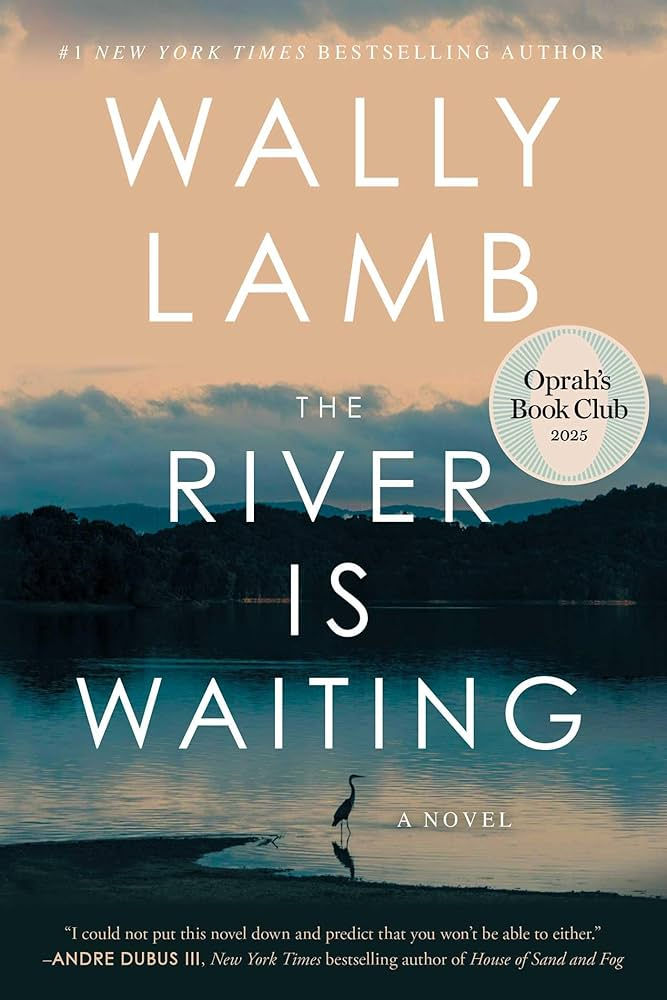
The River is Waiting by Wally Lamb
Fuuuuuuck, Wally. This is rough stuff. Heartbreaking and tragic and also so beautiful and worthwhile. I was hooked from page one in a way that’s incredibly rare, especially considering the weight of the subject matter. I don’t want to give away a single plot point. I went into it knowing only that it has something to do with the prison system—and I’m glad that’s all I knew. It’s a book about justice and culpability, cause and effect, punishment and redemption. I thought it was perfect.

Tilt by Emma Pattee
Imagine you’re 37 weeks pregnant, ambivalent about your impending motherhood, shopping for a crib at IKEA in Portland, Oregon when a massive earthquake—the Big One— hits. That’s the premise of Pattee’s apocalyptic day-in-the-life story, narrated by the pregnant woman, speaking to her unborn child. As Annie (our protagonist and the mother-to-be) sets out on swollen, blistered feet in an attempt to reunite with her husband, the story of her marriage unfolds through flashbacks. It’s not a perfect novel (it seems not to occur to Annie that she might go into labor any second—or maybe that’s the point?) but it was propulsive and held me in its grip until the end.

There There by Tommy Orange
I can’t say I liked it. This novel is bleak, and I was relieved when it was over. But as a piece of art, I admire it—and I admire its creator for making something so original (and tragic, and true) about the descendants of the original, native Americans.

Buckeye by Patrick Ryan
This is a beautiful, sweeping, classic, all American novel with complex but lovable characters whose lives become uniquely intertwined. Told from multiple perspectives, the novel spans roughly 50 years leading up to the country’s bicentennial. It’s about the ties that bind, love, abandonment, life, death, friendship, marriage and forgiveness. It’s sweet and satisfying and hopeful and sad in all the best ways. Really enjoyed it.

North Sun or The Voyage of the Whaleship Esther by Ethan Rutherford
Sometimes a book calls to me for reasons I cannot explain. Nothing about this novel beyond its physical manifestation (the cover, the paper, the structure—short chapters, almost like a novel in verse) makes it an Amanda book. Men, ships, whale slaughter, no thank you. But I loved it. I loved every word, every inch. Devoured in a matter of days, it’s a parable about greed and extraction, and a literary ocean teeming with symbolism and meaning. Historical, mythical, magical (again—not my scene—and yet!) North Sun is a philosophical, spiritual, marvel. I am so happy this underbuzzed gem is a finalist for the
National Book Award. So deserved.

The Rachel Incident by Caroline O’Donoghue
This was great. Funny, clever, endearing. A love story-campus-coming of age-buddy novel in one. I guess this would be classified as commercial fiction (too unique, unformulaic to be chick lit, but spunkier and more current than literary fiction). I’d describe this as Sally Rooney meets Margo’s Got Money Troubles. Good, smart, fun.

Julius Julius by Aurora Stewart de Pena
Workplace novels tend to roast the industries in which they're set, painting their inhabitants as shallow, self-serious egomaniacs and backstabbing social climbers. Julius Julius is different. Set in the world’s oldest ad agency (2,000 years old, to be exact), the novel shows us agency life through the eyes of three narrators: a talented strategist (haunted by the ghost of her workplace harasser), a creative director, and an aspiring account executive, who, despite her aptitude, has been trapped in an unpaid internship for two years, because others find her unlikable. While de Pena's depiction of advertising is spot on, the
creative liberty she takes with her setting is what makes this novel so interesting (and delightful). Ghosts roam the halls as do a family of wiener dogs, descended from those of the original owners. An ancient archivist works in the agency's cavernous underbelly, dispensing dating advice m with carefully preserved campaign files. It’s a novel about the powerful hold stories have on culture—and (to me—a brand strategist) an homage to the art of advertising. It’s also entertaining and light on its feet, dancing a tightrope of wit and weirdness I finished it in one sitting. I’m adding this to my list of "books for aspiring strategists that are not technically books for aspiring strategists". It’s really quite brilliant.

The Names by Florence Knapp
This is a beautiful “sliding doors” story of a family impacted by domestic violence and how a decision like what a mother names her child can impact the trajectory of so many lives. The Names presents three alternate narratives, each beginning with the day Cora—an abused young mother with her nine year old daughter in tow—registers the name of her infant son. I appreciated (particularly for a first novel) how well drawn the characters were and how the alternate timelines each had their fair share of beauty and tragedy. In less capable hands this concept could have been heavy handed (e.g. she names the kid after his father and lo and behold, he too is an irredeemable prick.) Hats off to Florence Knapp;
this is worthy of all the praise. If you read on Kindle and hard copy, I’d go with the hard copy for this one. The shifts from one storyline to the next might be easier to track that way.

The Friend by Sigrid Nunez
I’m not a dog book person. Too maudlin. Too sad. But this is not a dog book. It’s a novel about friendship and grief, with a Great Dane as best supporting actor. It’s about a writer whose friend and former teacher dies by suicide, leaving her to adopt his massive Great Dane, Apollo. In her tiny Manhattan apartment (no dogs allowed), the writer and Apollo are bonded in grief—and through it. The national book award winner (2018) is a beautiful, clever, often very funny exploration of grief, the power of human-animal relationships, and the benefits and pitfalls of art and writing as a means of capturing it all.

Heart the Lover by Lily King
Wow oh wow. The world didn’t lie. This novel is so beautiful and perfect—especially the ending. I haven’t loved an ending this way in a long time. True love, real and chosen family, coming of age, literature and letters—it’s all these good things in the best hands.

The Last Samurai by Helen Dewitt
Not sure who recommended this to me—or why it landed in my life right now. At 484 pages, it’s—not a light lift. In addition to clever prose this weird experimental novel has numbers and Japanese characters and passages in foreign languages. And somebow—I finished it in three days. The premise is what grabbed me: the premise being—we are selling ourselves short by limiting what we learn—or pursuing education not for its own sake, but as a means to doing something in particular. At the center of the novel is a brilliant mother and her young son, whom she teaches math and science and languages, beginning when he’s two or three. The mother is obsessed with the 1954 Kurosawa film Seven
Samurai—and the film becomes a framework for her son to discover the identity of his “real” father. It's all very weird, and (to my mind) not highly recommendable—but it sparked something in me, nonetheless.

Stoner by John Williams
If Edward Hopper painted a book--this would be that. Written in 1965, Stoner has been described by many as a perfect novel, and I’m not inclined to argue. It’s a quiet book, and a potent one, about one man—William Stoner—and his adult life, from freshman year of college to his dying day. In timeless prose, we witness Stoner as a son, a student, a teacher, a husband, a father, a lover, a nemesis, and a friend. The novel asks us to reflect on the nature of work and love and presence and striving. It questions what efforts are worthwhile and where the “real” world ends and begins. All the good stuff is here. I really loved it.

Wild Dark Shore by Charlotte McConaghy
Before I saw this popping up on every best books of 2025 list, a friend of mine raved about it. “Don’t tell me if you don’t like it,” she laughed: so I really really wanted to love it. And many people obviously have it has a 4.13 on Goodreads. It was just so … annoying? Tedious? Frustrating? It’s told from multiple perspectives. With one exception, the male and female characters have gender neutral names (which is a pet peeve of mine when an author is asking you to track quickly changing points of view). There are secrets and twists and ghosts who may or may mot be actual ghosts, and a nine year old who, while definitely the most lovable character, is also wildly precocious in his knowledge of science and seeds. It’s
not entirely unbelievable, but it chafes. Sigh. I may just be a grump, but it felt like the book wasn’t entirely sure what it wanted to be—dystopian, thriller, environmental treatise, family drama—and it just didn’t land for me.

Workhorse by Caroline Palmer
I’ve seen Workhorse described as The Devil Wears Prada meets The Talented Mr. Ripley, which feels accurate. There’s a touch of The Great Gatsby here too, as the (very long at 500 pages, but thoroughly compelling) narrative navigates wealth, class, carelessness, and the crafting of self. Set during the peak of the glossy fashion magazine era of New York City after 9/11, Workhorse skewers the pretension and excess of the publishing world by what I suspect is just accurately describing it. (I came within a stone’s throw of following that career trajectory at that time, and every cell in my body shrieked that the interview alone would be soul destroying). The novel’s protagonist, Clo Harmon—who suffers a similar soul detonation to the one I imagined for myself— is her own antagonist, deranged by ambition and making one jaw droppingly dangerous decision after another in pursuit of … well, that’s what the novel wrestles with. “That is the thing about this place,” Clo realizes.” You travel and travel and travel. And yet, you never arrive.” I loved this novel. While Clo is cast as an unlikable narrator, I loved being inside her head, and could even understand why she makes the decisions she makes, given the world in which she’s making them.

On the Calculation of Volume I by Solvej Balle
Perhaps you’ve heard of this novel—the first in a seven part series—about an antiquarian bookseller who, through some glitch in the space-time continuum, finds herself living the same day, November 18th, over and over (and over and over) again. Balle is a Danish writer, and her series comes to us in translation. It also has critics and bookstagrammers gushing—big time. The New York Times review called it “thrilling”, “enthralling” and “a stirring confrontation with reality that feels genuinely new.” Book One, at least, is none of those things. It is tedious and wafting, and the days (the narrator lives a year of November 18ths in book one) could be rearranged in any order whatsoever and be the same book. Sure, living the same day over and over might make one realize—via intense noticing— that a single day contains multitudes. Except nothing in the narrator’s experience feels multitudinous. It feels like her looking at Swiss chard and listening to her husband bumble around the house. There are no rules in Balle’s November 18th world (and I’m guessing fans will say that’s the point), so in repeating this day, the narrator can do and go wherever she wants. Sometimes the objects she buys remain—sometimes they don’t. Sometimes she talks to her husband, sometimes she doesn’t. It doesn’t matter. And thus there is no real reason for a reader to commit to seeing the enterprise through. The questions are interesting, but the stakes are non existent. It’s very frustrating to see an elegant wordsmith take an intriguing premise and say so little. I suspect the most satisfied readers are doing at least 90% of the work, and I wonder what it is (the hype, perhaps? A chance to be part of the conversation?) that makes them so willing. Like a meeting that could have been an email, this is a book that could have been a poem. I never want to discourage anyone from reading anything— but if you’re hoping to find a singular point of view in this series, you’ll need to supply your own.

Piranesi by Susanna Clarke
Nope. Nopety nope nope. When anyone tells me that “this fantasy novel is different/better than the others” I will just smile and nod and MOVE ON WITH MY LIFE (in which I hate pretty much all fantasy, regardless of quality.) I understand why lovers of fantasy like Piranesi. I really do. It’s philosophical, with religious and occult undertones that are fun to think about. I just prefer to think about those ideas against the backdrop of the world I live in. The tedium of learning a new world is exhausting to me, but I committed to this to make CERTAIN I’d learn my lesson.

What Does it Feel Like? by Sophie Kinsella
Sophie Kinsella was one of the chick lit greats. I had no idea she’d been diagnosed with an incurable cancer before reading this autobiographical novel published in 2024. This is a funny, heart wrenching and ultimately hopeful work of art, told through short vignettes. I’m grateful she wrote it.
NON-FICTION & MEMOIRS

A Swim in a Pond in the Rain by George Saunders
I love this book with every fiber of my being. For me it’s right up there with Stephen King’s On Writing and belongs on every list of "Books Every Writer Must Read." Subtitled “In Which Four Russians Give a Masterclass on Writing, Reading, on Life”, this is a particular kind of book for a particular breed of people. That is, people who want to become better writers and people who want to become better readers. But also? People who are in love with George Saunders and also kind of want him to be their dad? (I know I’m not the only one). The way Saunders breaks down (and celebrates and opens up) these short stories is so joyful and charming and funny and wise, it’s like having the absolute coolest professor
(slash boyfriend slash dad I’M SORRY I JUST LOVE HIM SO MUCH) give a private literature class just for you.
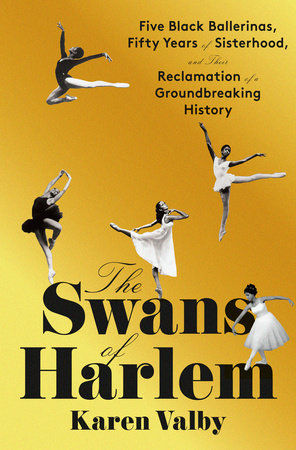
The Swans of Harlem by Karen Valby
Five Black Ballerinas, Fifty Years of Sisterhood, and Their Reclamation of a Groundbreaking History
Decades before Misty Copeland became America’s “first” black prima ballerina, there were the Swans of Harlem, an all black ballet corps who danced for presidents and dignitaries and audiences across the globe.They were the real first black professional ballerinas in America, trained at the legendary (and historically forgotten) Dance Theater of Harlem, founded by the ambitious, mercurial, demanding (and often downright nasty) Arthur Mitchell. This is a detailed and journalistic reclamation of that history and it gives us the good, bad, and ugly—like how even in an all black dance company, the women were
subjected to white standards of beauty. The whole time I was reading this I kept thinking about what a beautiful work of historical fiction it would make. I’m glad this crucial piece of ballet history exists—and Valby does a beautiful job bringing it to life—but imagine the truth an artist could draw from this material: showing instead of telling, like ballet itself.

Private Equity: A Memoir by Carrie Sun
Devoured it. A Chinese immigrant and graduate of MIT (in three years, with degrees in both math and science) Sun accepts a job as an assistant to the founder of an enigmatic and wildly successful hedge fund, a job that is all consuming and ultimately mind-, body-, and soul-crushing, literally and figuratively. I was riveted. And appalled. And enraged. And fascinated. There are multiple traumas at play here, beyond what Sun endures on the job, and the way she weaves these threads of her history into the career narrative is masterful. Highly highly recommend.

Lifeform by Jenny Slate
Jenny Slate is a national treasure. She is so weird and whimsical and heartfelt and funny and free. Her standup is hilarious and she’s a terrific actress, but her writing is not the typical “actress comedian” essay fare. It's weirder. And deeper. And (I think) more beautiful because it’s art. There are one or two pieces here that run too far amok or take a little too long to land, but I love her for it, because she’s being true to her bonkers brain rather than resorting to an impersonation of herself (which comedians sometimes do when they’re on the hook for a whole book). Slate reads the audiobook, and I can’t imagine there’s a better way to experience her work. I’m a forever fan.

Here After: A Memoir by Amy Lin
For those of you who have been following along for awhile you know about my obsession with grief memoirs. The good ones (which most of them are) bring us as close as we’re likely to get to the meaning of life. Here After is one of the good ones. Lin is 31 when her husband (32) dies suddenly. Ten days later she finds herself in the emergency room facing a life threatening condition and lengthy and uncertain road to recovery. The memoir’s structure—short chapters, bouncing back and forth in time— before, after, joy, despair—is a perfect mirror for Lin’s grief; in it we can see both the magnitude of Lin’s suffering and our outsider’s inability to do anything to change it.

Notes on Grief: A Memoir by Chimamanda Ngozi Adichie
After my last post an Instagram friend recommended Notes on Grief to me. It’s quite beautiful—both as a tribute (Adichie’s father died unexpectedly during the pandemic, not of COVID) and as a portrait of grief. While everyone experiences and navigates grief differently there is so much commonality too. The particular pain of mornings. The platitudes that rankle. And this gem: “You learn how much grief is about language, the failure of language and the grasping for language.” There are no failures of language here.

Tell Me Everything: The Story of a Private Investigation By Erika Krouse
In 2002, Krouse meets a man in a bookstore as they’re both reaching for the same novel. Moments later he’s spilling his guts, telling her things he’s never told anyone. It’s her face, she tells him. This sort of thing happens to her all the time. Turns out he’s a lawyer and he hires Krouse on the spot to be his private investigator, figuring if she could get him to talk—she could get anyone to talk. Her early cases don’t go smoothly, but when he assigns her to a rape case involving college football players, the investigation becomes personal. A victim of sexual assault at the hands of her stepfather, Krouse finds herself fighting for justice on behalf of the college women in the case—as well as herself. The parallel narratives are intriguing and maddening, and I had to keep reminding myself that what I was listening to
really happened, as it does again and again.

The Tell by Amy Griffin
Devoured this memoir, which happens to be Oprah’s latest book club pick. Griffin is a courageous writer, and her story will be important to many many people. I went in blind, not knowing (but suspecting) what her story might be about. It was a good way for me to experience the book so I won’t go into any more detail here. Just highly recommend.

Careless People by Sarah Wynn-Williams
If this doesn’t convince me to ween myself off Meta, maybe nothing will. This memoir written by former Facebook policy director and whistleblower Sarah Wynn Williams is a doozy. Titled after F. Scott Fitzgerald’s line in the Great Gatsby about Tom and Daisy Buchanon, Careless People will confirm your worst fears about Facebook’s top brass: they just don’t give a fuck. They will do anything—ANYTHING—to keep accumulating wealth and power; democracy and humanity be damned. In addition to selling out the United States to get Trump elected, did you know Zuckerberg seriously considered a presidential run himself once he saw the political power of his platform? Or that Sheryl Sandberg, champion of women in the workplace, commanded her female subordinates to sleep in bed with her? Did you know that being in a coma is no excuse for being unresponsive to work emails? Not at Facebook. Having this front row seat to some of the most corrupt, egregious, egomaniacal, and sociopathic behavior and decision making was WILD. And deeply deeply disturbing.

78 Acts of Liberation - Tarot to Transform Our World by Lane Smith
Tarot is something that appeals to me both on a personal level and as it pertains to my work as a strategist. Understanding how symbols function in storytelling and choosing the ones with the most potency is the fundamental work of strategy. When I find myself getting stuck in strategy it’s often because I’ve convinced myself there is a RIGHT answer or ONE SINGLE way to assemble a puzzle or connect the dots.There never is.There are only useful ways and less useful ways. 78 Acts of Liberation examines the tarot through the lens of power and social justice movements, and it’s fascinating, not to mention deeply informative. Smith connects each card in the major arcana with a specific movement and each of the minors with a political action. If you’re tired of pulling tarot cards strictly for self reflection, this is a great way to enrich your practice—and see the potency of these symbols in a richer, more expansive light. Smith is a fantastic writer and teacher.
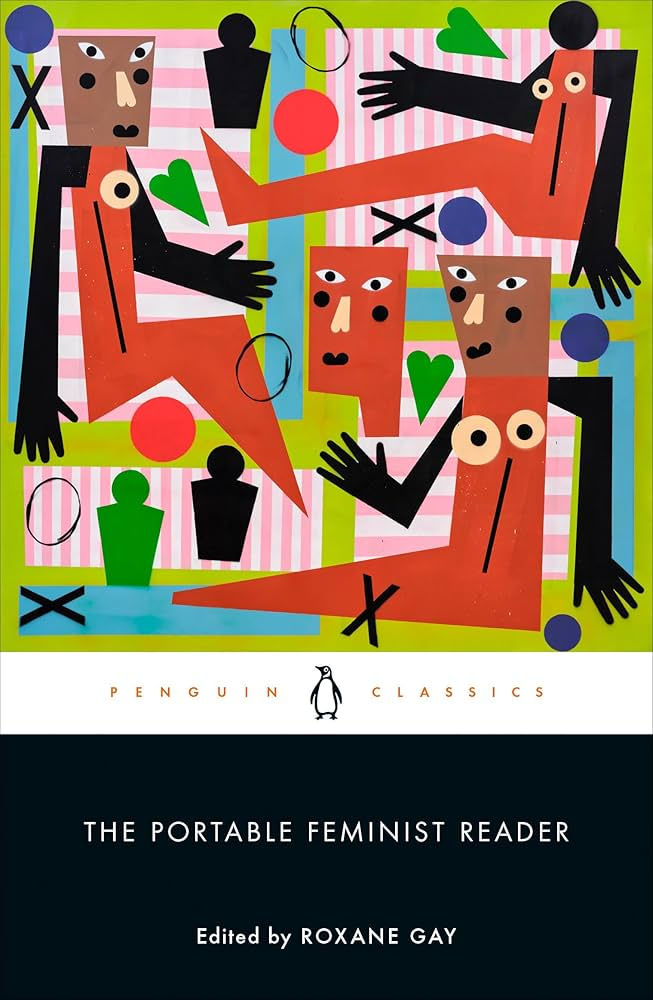
The Portable Feminist Reader Edited by Roxane Gay
This is the gift. The graduation gift. The birthday gift. The Mother’s Day Gift. The gift for the
well-read woman in your life. I’d tell you to buy it for the well-read man in your life, but somehow I’m not sure he’d read it. It’s a lot to take in. Gay has curated a collection of historical and intersectional range. (The book is divided into nine parts, including “Laying a Foundation”, “Multicultural Perspectives”, “Gender Considerations”, and “Black Feminism”.) I did something I never do, which is read entirely out of order, following my curiosity until I’d made my way through all the sections. There’s some hard-core (and therefore challenging to read) academic writing here (WHY, ACADEMICS, WHY?), but it’s by no means the majority. I learned. I cheered. I raged. I confronted some ugliness in myself. And I underlined and tabbed the hell out of it. Highly recommend.

Memorial Days: A Memoir by Geraldine Brooks
I have yet to read one Brooks’s novels—but y’all know I can’t resist a grief memoir. Why is it, I wonder, that this sad, specific sub genre speaks to me? I think it’s that something as big as grief leaves so little chance of failure to move me. And I need to be moved. Also, there is nothing more universal and more singular than grief. I have watched so many people close to me grieve untimely deaths. The thought of having to do that kind of grieving myself terrifies me. So perhaps, more morbidly, reading grief memoirs is a form of rehearsal or exposure therapy, a safe imagining of the inevitable. Brooks has written a beautiful memoir, ebbing and flowing in time from the immediate aftermath of her husband’s sudden death at the age of 60, to the self-imposed mourning trip she takes to Flinders Island in her home country of Australia three years later. The prose is honest and real, and the structure tells a second story—representing, in a way, the road not taken, the life—or at least the locale of the life—she might have had, had she not had him.

The Book of Alchemy by Suleika Jaouad
Between Two Kingdoms, Jaouad’s memoir about navigating the world during and after cancer treatment, was a wonder. Here, she shine’s a light on journaling, the creative and spiritual practice that’s sustained her in times of uncertainty and fear. The Book of Alchemy is a collection of short essays and journal prompts on topics like memory, fear, love, the body, and rebuilding, among others. Jaouad opens each section with an essay of her own, then passes the pen to other artists, philosophers, writers therapists, educators, and activists whose short essays and musings are followed by a corresponding prompt. There are 100 such essays here—ranging in style and substance, and while they’re not all earth shattering—many were just the right kind of thought provoking for me at this moment in time.

Against Technoableism: Rethinking Who Needs Improvement by Ashley Shew
Ashley Shew is a professor of science, technology and society virginia Tech, who specializes in disability studies and technology ethics. She’s also a cancer survivor and amputee, who argues that Technoableism, where technology is viewed as a “cure” for disability, is deeply harmful to disabled bodies. This slim book of connected essays (that are also part memoir) makes clear the harms of ableist thinking being baked into our infrastructure and laws.

A Three Dog Life by Abigail Thomas
Beautiful. My friend Betsy recommended this memoir, the tone and style of which are pitch perfect. Following a horrific accident, Thomas’s husband suffers a traumatic brain injury that upends their late middle-age existence, and Thomas is left to navigate and write her way through a different sort of life. Theres no drama, no self pity—just an honest reckoning with the now of it all. Thomas feels like a person I’d like to know—incisive like Joan Didion but warmer and unpretentious. To my delight there is more where this came from; Thomas has written three more memoirs I can’t wait to get my little mitts on.

How to Lose Your Mother: A Daughter’s Memoir by Molly Jong-Fast
There will be readers who call this book a betrayal. They’ll harumph about how they would never talk about their mother this way, or reveal so much, completely missing the obvious point that of course they wouldn’t, because they are not Erica Jong’s daughter. Only Molly is Erica Jong’s daughter, and being the only child of the celebrated Fear of Flying author was a rough ride. Jong was a narcissist and an alcoholic, who loved her daughter and failed mightily to mother her. As her mother descends into dementia, daughter’s life is beset by a series of catastrophic losses, lik a modern day Job. But the author
isn’t asking for our pity—except when she openly admits that’s exactly what she’s asking for, and then kicks herself for it. I would describe this memoir as flinchingly honest, because Jong-Fast critiques her mother’s mothering and her own “daughtering” with equal rigor. She is aggrieved and ashamed. Guilty and resentful. She is sympathetic to and critical of her own plight. The complexity of this particular mother daughter relationship is not entirely universal, and the specificity is what makes it interesting. At the same time the writing—the telling of it—was deeply relatable to me.

Salvation on Sand Mountain by Dennis Covington
Snake Handling and Redemption in Southern Appalachia
Reporting for the New York Times on the trial of Glenn Summerford—a preacher accused of trying to murder his wife via rattlesnake—Dennis Covington is drawn into the fascinating (and deeply disturbing) world of snake handling churches in southern Appalachia. This is his wild (and to my Northeastern sensibilities, unnervingly earnest) memoir. My friend Amy gifted this—her favorite work of nonfiction— to me for my 50th birthday. Her paternal grandfather has people in Sand Mountain, and the story resonated with her in ways that surprised her. It struck a chord with me for the opposite reason:rarely do I encounter a cast of characters so completely other from me. The venn diagram of Amanda O’Brien
and the Snake Handlers is two circles: Nashville and Neptune. Those who “handle” (the language reminds me of AA when they refer to alcoholics as those who “use”) experience an ecstasy akin to “snake” handling of a more metaphorical nature, and no one (apart from the author) seems to make the connection. It’s just “the Holy Spirit” (my scare quotes) “moving on them” (their words). It’s fascinating, thoroughly Southern Christian stuff. If you’re curious about the subject—this is a weird and wonderful place to start.

The Jakarta Method by Vincent Bevins
Washington’s Anticommunist Crusade & the Mass Murder Progran that Shaped Our World
Larry and I are empty nesters now, so we started a Saturday morning book club. This was our first pick, and it was a doozy. If I could force every American to read one book right now, this would be it. Understanding the (little known) US strategy in Indonesia (and subsequently South America and Central America) during the Cold War puts everything that is happening right now into critical context. If you’ve ever wondered why communism is such a dirty word (despite the fact that few who fear it can define it)—here’s your answer.

Priestdaddy by Patricia Lockwood
This cover has been winking seductively at me from my shelf for years, and the book gods finally decided it was time. Written by cracked genius poet word sorceress Patricia Lockwood—this memoir was named one of the 10 Best Books of 2017 by the New York Times, 5 Best Memoirs of 2017 by the Washington Post, and 10 Best Books of 207 by New York Magazine. It’s anyone’s guess why it took me eight years to pluck it from the TBR tree, but this weird wonder gem lands beautifully in the 2025 of it all. It’s about her weird wonderful parents—dad is a catholic priest—who take her and her husband in so they can save up enough money for a vital surgery. It’s about family—as both the source and source material—and the many (many) shapes love can take. I loved it and underlined it and stayed up late into
the night giggling into my sheets.

Sapiens by Yuval Noah Harari
The second selection for the Amanda Larry Book Club (which needs a better name), Sapiens offers a lot of food for thought. A survey course of human history (lectures published in book form), Sapiens doesn’t hang together perfectly. What it does do is present a variety of theories and schools of thought regarding how we got this way—and what might be next for our species. It’s a lot to take in, but the writing is warm and accessible (I imagine the lecture course was a hot ticket for students). I learned a lot and re-learned a lot (and will likely forget a lot more), about the cognitive revolution, the agricultural revolution, and the scientific revolution that’s living up to many of the predictions Harari posited when this book was published a decade ago.

Elseship by Tree Abraham
This is a memoir of unrequited love. When Brooklyn based book cover designer Tree Abraham (whose work I love, though I hadn’t connected the dots when I picked up elseship) falls in love for the first time it’s with one of her housemates, who doesn’t feel the same. Instead of one person moving out or moving on, the two forge an “elseship” that defies categorization. This is the story of that bond, told through poetic prose, lists, and other artifacts of the year following Tree’s pronouncement. While the housemate’s feelings (and actions and reactions) were complicated, I couldn’t help falling in love with Tree and her shimmering, luminous mind. It’s fascinating to see how “a designer who writes” shapes the raw material of their thoughts and feelings. The result here is a treasure trove of self reflection that is part poetry, part at object, part prose. I really loved it.

Nobody’s Girl by Virginia Roberts Giuffre
This is Giuffre’s first-hand (and co-written) account of the abuse she endured at the hands of her father, then Jeffrey Epstein and Ghislaine Maxwell and the many rich and powerful men to whom she was routinely trafficked. It’s brutal. Particularly knowing that following her years of activism, Giuffre was abused by her husband and died by suicide at the beginning of this year. In the final chapter she says, “not all men are monsters”—but the vast majority she encountered in her short life absolutely were. Cruel. Arrogant. Entitled. Monsters. Some of them she chooses not to name because they’ve threatened retaliation against her and her family. It feels important to bear witness to stories like these, and I’m grateful to Giuffre for going public, though the cost was unfathomably high.

Raising Hare by Chloe Dalton
Chloe Dalton is a writer, political adviser and foreign policy specialist, who left London (and a life dominated by work) for her home in the English countryside during Covid. As she settled in to a slower pace and life of solitude, she encountered a leveret that had been abandoned by its mother and attempted to rescue it. A local vet warned that the leveret would die of stress if held in captivity. But the alternative—to set it loose without a mother to nurse it—would result in certain death as well. So Dalton, treading ever so carefully, found a middle way that allowed the leveret to stay wild—and protected. In moments this memoir is the buddy comedy you never knew you needed. In others it’s a powerful meditation on nature and symbiosis. At all times it is pitch perfect. Dalton goes down a
metaphorical rabbit hole learning everything she can about wild hares, and for the first time, trains her eye on her immediate surroundings. By narrowing her scope in this way, she expands her life in so many others, and we are the lucky ones who get to watch.

Awake: A Memoir by Jen Hatmaker
Jen Hatmaker has been on my radar since she went on We Can Do Hard Things awhile back, announcing her relationship with Tyler Merritt (whose Nashville circle overlaps with mine). I'd been peripherally aware of her as a blogger and Christian-y humor writer before then, but I wasn't tuned in to her work (because: Christian-y). Well. Color me a fan now. This is one hell of a memoir (and a highly entertaining audiobook, with lots of extras and guest voices chiming in). Anchored in the aftermath of her divorce, the memoir is told through vignettes from Jen's past and present, all of which coalesce into a beautiful, sometimes emotional, often funny, and always authentic story of a woman reborn to herself. It covers infidelity, Christian purity culture, the patriarchy, capitalism, therapy, healing, family, and the incomparable power of friendship. Such a great read.

Brother, I’m Dying by Edwidge Dandicat
It feels like a sin that I’d never read anything by Edwidge Dandicat before this beautiful memoir, which is a masterclass in the form. I listened to the audiobook, which is exquisitely performed by Robin Miles, and I came away feeling like I know Dandicat’s family members personally. The memoir weaves back and forth in time, recounting Dandicat’s youth in Haiti, where she was raised by her aunt and uncle, after her mother and father emigrate to the U.S.. (She and her brother reunite with their parents and younger siblings in the US, when Edwidge is a young teen.) The story opens with Danticat's father receiving a terminal cancer diagnosis just as Dandicat discovers she's pregnant with her first child. As her father's health declines, gang violence in Haiti forces her uncle to flee-- and what happens to him when he reaches US soil is unconscionable and devastating. The final third of the memoir is a gut punch, particularly today when US immigration "policy" is so sickening, Published in 2007--the memoir is timeless treasure.
So tell me, please: what did you read and love this year? What did you loathe? Are we book friends on Instagram? @ispygrayeyes is where I post about books and book news in real(er) time. I hope you'll join me there.


